Bird-Friendly Design Ordinance
On March 16, 2026, the City Council approved the new Bird-friendly Design Ordinance, which establishes regulations to minimize hazards and reduce the potential for bird collisions while still allowing for practical building design. Its primary focus is to reduce glare and reflectivity from glazing (most commonly windows), which will essentially lead to a reduction in bird injuries or mortality. The adopted ordinance has been in effect since May 7, 2026.
Adopted Ordinance
Please Note: Below is a high-level summary of the adopted ordinance. It provides a quick overview, but please review the full document for specific requirements:
Applicability
- New construction and major remodel projects.
- New glazing on existing buildings or structures.
- New or replacement Bird Hazard Installations.
- Glazing within 15 feet of a green roof.
Bird Sensitive Area (map(PDF, 1MB))
- Areas located east of Highway 101.
- Areas located west of Foothill Expressway.
Bird-Friendly Design Requirements
- Bird-friendly treatment is required for any unbroken glazing 24 square feet or larger.
- For residential buildings:
- Within the Bird Safe Area, no more than 10% of an elevation can be untreated.
- Outside of the Bird Safe Area, for the portions of structures higher than 35 feet, no more than 40% of an elevation can be untreated. The portions of structures below 35 feet are exempt.
- For non-residential buildings, no more than 10% of an elevation can be untreated. The portions of structures below 35 feet may use non-permanent markers approved by the American Bird Conservancy or its equivalent, subject to Director approval.
Bird-Friendly Treatment Specifications
- Treated glazing must include permanent visual cues:
- Dots or other shapes at least 1/4-inch in diameter, spaced no more than 2 inches apart in any direction.
- Lines at least 1/8-inch wide, spaced no more than 2 inches apart.
- Non-permanent markers may be allowed for residential development or the residential portion of a mixed-use development.
- Alternatively, permanent exterior features over glazing, with no gaps larger than 9 inches in one dimension, are allowed.
Alternative Compliance to Bird-Friendly Design Requirements
- Alternative compliance requests should be submitted with a report prepared by a biologist or ornithologist with experience in bird-friendly building design. This report should be submitted as part of a development application.
Exemptions
- Historic structures, 100% affordable housing projects, and Accessory Dwelling Units (ADUs)/Junior ADUs.
- The first floor of commercial uses facing a public street, up to 14 feet in height, within retail and mixed-use zoning districts.
- Portions of residential structures below 35 feet located outside the Bird Sensitive Area.
- Glazing necessary for airport safety or navigation in connection with operations at the Palo Alto Municipal Airport.
Examples of Bird-Friendly Glass and Exterior Features
Example of Bird-Friendly Treatment Glazing: 2x2 Dots

Example of Bird-Friendly Treatment Glazing: Vertical Lines
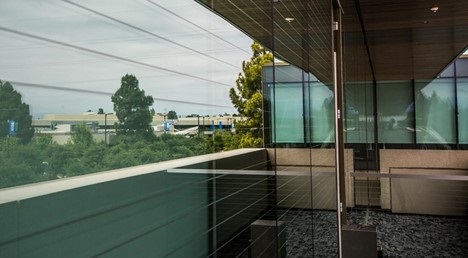
Example of Exterior Features

Past Community Engagement
The ordinance development process has included community input through public meetings with board and commissions and public outreach. Please see the table below to access meeting materials including staff reports and recordings of public hearings.
Past and Planned Outreach
- Architectural Review Board
- February 15, 2024: Study Session on the concept of the Bird-Friendly Design Ordinance.
- July 18, 2024: Study Session on the initial draft ordinance as well as focused discussion on the applicability, how much of the Bird-friendly treatment should be applied, as well as exemption for residential buildings.
- Planning and Transportation Commission (PTC)
- August 14, 2024/August 28, 2024: The PTC continued this hearing to allow staff to simplify the draft ordinance further, including the Bird Sensitive Area, to streamline implementation. Additionally, non-permanent markers were added as an option for Bird-Friendly Treatment to be applied only to residential buildings and the residential portions of the mixed-use development.
- October 30, 2024: The PTC forwarded the recommended draft ordinance with several amendments, including expanding its applicability to more project types, amending where and how much to apply the Bird-Friendly Treatments, revisions to definitions including the Bird Sensitive Area, and changing the criteria for different ways to design bird-friendly buildings (alternative compliance).
- December 10, 2025: The staff presented the draft ordinance reflecting the PTC direction from October 2024, along with some concerns and recommendations regarding the cost and availability of bird safe glass. The PTC forwarded the draft ordinance to the City Council for consideration with several modifications, mostly aimed at reducing the burden of cost and availability of manufactured glass and other bird safe options for single-family homeowners.
- Community Outreach
- October 8, 2025: A focused outreach meeting was held virtually with Palo Alto businesses to get their feedback on the draft ordinance. A total of 38 participants attended, expressing concern that bird-safe glass might be visually unappealing, making buildings harder to lease. They also questioned the ordinance's necessity, as no study shows how often birds actually collide with buildings specifically in Palo Alto.
- January 15, 2026: A second focused outreach meeting was held virtually with Palo Alto businesses to describe the PTC action and its impact on the local community. Staff explained that the December 2025 PTC action removes burdens from existing buildings, including retail spaces, specifically, the requirement to apply new regulations to existing fenestration upon replacement has been removed. One participant suggested that non-permanent markers, such as films and decals, should be allowed for new non-residential development.
- City Council
- March 16, 2026: The City Council adopted the draft ordinance with modifications including, but not limited to, adding glazing within 15 feet of any green roof to comply with the new regulations, and allowing non-permanent markers for the portions of non-residential development below 35 feet.
- April 6, 2026: The City Council approved the second reading of the ordinance, setting the effective of the ordinance as May 7, 2026.
Prior Public Meeting Materials
| Date |
Meeting |
Agenda or Supplemental Documents |
Video |
| April 6, 2026 |
City Council Hearing |
Agenda (Item #13)
Staff report and attachments can be found on the agenda linked above.
|
Video |
| March 16, 2026 |
City Council Hearing |
Agenda (Item #14)
Staff report and attachments can be found on the agenda linked above.
|
Video |
| January 15, 2026 |
Focused Outreach Meeting |
Presentation(PDF, 6MB) |
Video |
| December 10, 2025 |
Planning and Transportation Commission Hearing |
Agenda (Item #3)
Staff report and attachments can be found on the agenda linked above.
|
Video |
| October 8, 2025 |
Focused Outreach Meeting |
Presentation(PDF, 3MB) |
Video |
| October 30, 2024 |
Planning and Transportation Commission Hearing |
Agenda (Item #2)
Staff report and attachments can be found on the agenda linked above.
|
Video
|
|
August 28, 2024 (Continued from August 14, 2024)
|
Planning and Transportation Commission Study Session |
Agenda (Item #2)
Staff report and attachments can be found on the agenda linked above.
|
Video (Commission discussion only)
|
| August 14, 2024 |
Planning and Transportation Commission Hearing |
Agenda (Item #4)
Staff report and attachments can be found on the agenda linked above.
|
Video (staff presentation and public comments only)
|
| July 18, 2024 |
Architectural Review Board Study Session |
Agenda (Item #2) |
Video |
| February 15, 2024
|
Architectural Review Board Study Session |
Agenda (Item #3)
Staff report and attachments can be found on the agenda linked above.
|
Video
|
Other Helpful Resources
City’s Comprehensive Plan (Policy L-6.3 on Page 53)
Resources to find Bird-Friendly glazing information: