Fats, Oils, and Grease (FOG) Requirements for Food Facilities

Fats, Oils, and Grease (FOG) are vegetable or animal products that are used in, or are a by-product of, the cooking or food preparation process. The City of Palo Alto is required by federal, state, and local laws to prevent FOG from entering the storm drain system, sanitary sewers, streets, or waterways.
The Problem with FOG
Meat, lard, oil, salad dressings, and dairy products are all sources of FOG. They wash off dishes, pots, pans, and other surfaces into sinks and floor drains that enter the sanitary sewer. Once there, they clog pipes and lead to sewer overflows which can result in expensive repairs, fines and cleanup costs. Additionally, overflows and spills can negatively impact public health, waterways, and the storm drain system. FOG device maintenance helps prevent these problems.
How to Comply with FOG Control Requirements
The updated Palo Alto Municipal Code (PAMC) Chapter 16.13 outlines requirements for FOG control at food facilities. The Palo Alto FOG Regulations explains all requirements in detail. By following the Regulations, food facilities will be in compliance with FOG regulations, including California Plumbing Code, Uniform Plumbing Code, and Palo Alto Municipal Code.
Palo Alto FOG Regulations(PDF, 954KB)
To control FOG, food facilities must:
A GCD is a piece of equipment designed to separate FOG and solid food waste from kitchen wastewater.
There are two types of GCDs:
- Hydromechanical Grease Interceptors
- Gravity Grease Interceptors
GCDs may be located in the kitchen or outside the food facility. They must be made of a material specified in the regulations. A City permit is required for installation.
Hydromechanical Grease Interceptors (HGIs)
Hydromechanical Grease Interceptors (HGIs) are preferred by the City. They are typically non-mechanical, allowing for passive separation of grease. HGIs must be sized appropriately and meet specific certification standards as detailed below.
HGIs come in a variety of configurations, sizes, makes, and models. HGIs are versatile and can be installed indoors or outdoors, above or below ground.
These field photos show just a few different types and configurations of HGIs.
 |
| HGI connected to a sump pump |
 |
| Large HGI below ground installation |
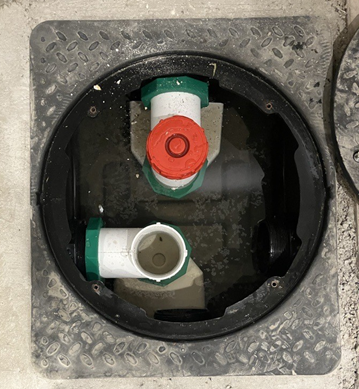 |
| Interior view of an HGI |
How to size your HGI and submit for approval
The City’s method to size an HGI first determines the minimum required flow rate and then calculates the estimated grease loading anticipated from the food facility. An HGI must be sized appropriately for your type of food service to ensure that it has adequate grease storage capacity to meet the City’s required 30-90 day pump-out period. To determine appropriate sizing, complete the HGI Sizing and Selection Worksheet and submit it with your Building Permit application packet for evaluation and approval of the proposed project by the City Building Department.
For assistance with the form, please contact FOG@paloalto.gov
HGI Sizing and Selection Worksheet(PDF, 320KB)
For more information on sizing, refer to Palo Alto FOG Regulations (Part 4 Section K).
HGI Certification Details and List of acceptable HGIs
- HGIs shall be sized according to the following certification standards: ASME A112.14.3 Appendix A, ASME A112.14.4, CSA B481.3 or PDI G101.
- When proposing HGIs, the applicant should indicate in the plans the HGI's third-party certifier, capacity in gallons per minute (gpm), and capacity in pounds of grease retention at 90% removal efficiency. Testing results from the certification of the HGIs must be obtained from the manufacturer and be submitted with the Building Permit application packet.
The following is a list of HGIs that are tested for 99% removal efficiency. The list is not all-inclusive and does not represent endorsement of any one company or product.
- Schier GB1, GB2-2, GB-75-B, GB-250-B, GB250-B (2023 model), GB-75-2, GB250-2 Series, GB-500-B, GB-1000 (old model), GB-1000 (new 2021 model or later), GB-1500, GB-1000-B, GB-1500
- Endura 4050HEA04 / 4050HEA04C (cast-iron lid), 4075HEA04 / 4075HEA04C (cast-iron lid), Endura XL-75 and -100 (4075A04, 4075A04M, 4075A04C, 40100A04, 40100A04M, 40100A04C, 40100E04)
- MiFAB/FOG Enforcer/T&C Plastics MI-G-6-PL-99, LIL-35-99/FE-35-99, XL-MIG-PL-750, BIG-750/FE750, XL-MI-G-PL-1150 (BIG-1150/FE1150; GI-XL-100), SUPER-500 (SM-MI-G-PL-500; FE-XL-500; GI-SS-500), SUPER-1250 (SM-MIG-PL-1250; FE-XL-1250; GI-SS-1250)
- Zurn Z1165-700, FOG-ceptor Z250H-MD in Series, Zurn Z-250H Series
- Thermaco TZ-525, TZ-600
- Highland HM-100-93 AC
- or equal
Gravity Grease Interceptors (GGIs)
Gravity Grease Interceptors (GGIs) are large tanks, typically made of cement, and can hold 750-3,000 gallons. They are not tested or rated for performance like HGIs, and as a result they are subject to the 25% rule. To learn more about the 25% rule, refer to the Grease Control Device BMPs. GGIs store a minimum of 300 gallons at a 30-minute retention time and have no fewer than two compartments with baffles and gravity separation devices. As a result of their large size, GGIs tend to be expensive to install.
How to size your GGI and submit for approval
GGIs shall be sized in accordance with the current California Plumbing Code (Section 1014.3.6). The calculations shall be documented on the GGI Sizing and Selection Worksheet. Once completed, submit the form and requested documents with your Building Permit application packet for evaluation and approval of the proposed project by the City Building Department.
For assistance with the form, please contact FOG@paloalto.gov
GGI Sizing and Selection Worksheet(PDF, 208KB)
For more information on sizing, refer to Palo Alto FOG Regulations (specifically Part 4 Section I).
GCD Acceptable Construction Materials
The following GCD construction materials shall not be allowed: materials susceptible to corrosion in low pH environments, concrete, metal, and acid-resistant enamel (A.R.E.) or epoxy coatings.
Examples of acceptable materials of construction include poly-plastics like thermoplastic (low or high-density polyethylene) or similar non-corrosive materials.
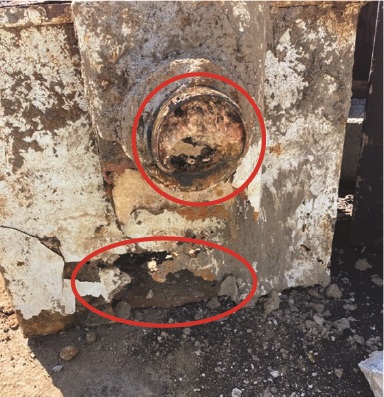 |
| This example of a corroded metal GCD has holes in the bottom, and the pipe is clogged and non-functional. |
|
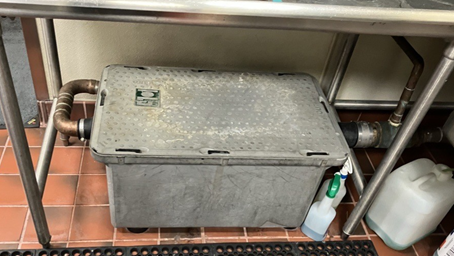
|
| This example of a poly-plastic HGI is not susceptible to corrosion. It has a longer lifespan, leading to lower replacement and repair costs. These HGIs are available in various sizes and materials and from different manufacturers. |
GCD Installation Requirements
A GCD is required per Palo Alto Municipal Code (PAMC) Chapter 16.13 for all food facilities that can introduce fats, oils, and grease (FOG) into the sanitary sewer system. The process of applying for and installing a GCD requires approval and permits from both the City of Palo Alto and County of Santa Clara Department of Environmental Health. The information below can assist you in the planning process.
Food facility checklist(PDF, 152KB)
Be sure to review the HGI or GGI sections above and complete the appropriate Sizing and Selection Worksheet.
Per the FOG Regulations, all plumbing fixtures in the food preparation, alcohol service, cleanup, and food service areas of a food facility shall be connected to a GCD. For a comprehensive list, visit the Palo Alto FOG Regulations (specifically Part 3, Section A).
Questions? Contact us at FOG@PaloAlto.gov
Building Permit Application Process
City of Palo Alto Building Permit Application Process
A City review of your Food Facility's project plans is required for all projects, including new development, additions or enlargements, renovations, and change in use or occupancy. Planning and Development can help you determine what is required. Below is an overview.
1. Preparation of Building Permit Application Packet with GCD Information: All information regarding the GCD, connected kitchen/bar fixtures, and grease waste lines should be on the plan set. Be sure to submit the completed food facility checklist, sizing and selection worksheet, GCD specification sheet, and menu as part of the supporting documents with your Building Permit application packet.
2. Building Permit Application Submittal: Once your building permit application packet is complete, a City of Palo Alto building permit application must be filed with a Planner during a required appointment. Please call (650) 329-2441 to schedule an appointment or visit Planning and Development website.
A Planner will determine if all submittal requirements have been met for a review to begin. Incomplete applications will not be accepted.
3. Building Permit Application Packet: Once the Building Permit application packet is deemed complete, City staff will review it and follow up with questions and changes that must be addressed.
4. Building Permit Approval and GCD Installation: Once you have received approval via a Building Permit from the City, then installation can begin.
5. Inspection of GCD: When the GCD and grease waste lines are ready for installation, email FOG@paloalto.gov to schedule an inspection. This pre-installation inspection will help to ensure passing the final inspection.
Note that receiving guidance from the City FOG program for installation of a GCD does not constitute a Building Permit.
Santa Clara County, Department of Environmental Health permits
Visit County permits for retail food operations compliance to determine the County's permit requirements and process.
Effective 7/1/2026, outdoor waste oil bins must be stored in secondary containment designed to prevent rainfall intrusion and waste oil runoff.
Secondary Containment Requirements
All secondary containment must be approved and inspected by City staff. Contact FOG@paloalto.gov for guidance.
Failure to comply with the secondary containment standards (PAMC Chapter 16.13 Part 8) by the effective date (7/1/2026) may result in structural retrofits required by PAMC Title 17.
The City acknowledges that food facilities may have space constraints. Staff is available to collaborate with businesses to achieve compliance. If the City determines that secondary containment is infeasible, then at minimum, the waste oil container containment should include a spill pad, designed to catch spills and prevent staining, and a cover capable of preventing rainfall intrusion. Below are photos of some of the approved types of secondary containment and covers.
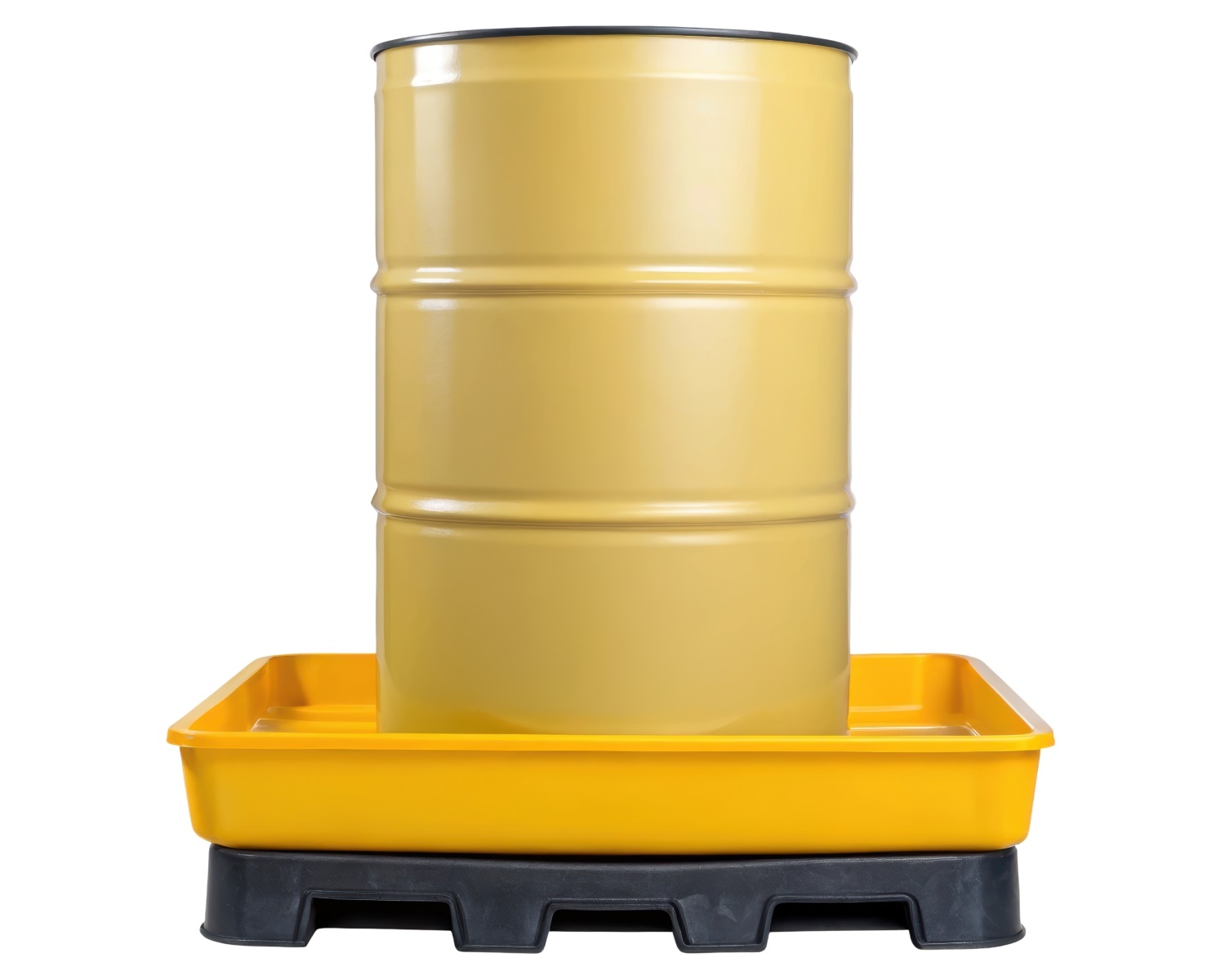 |
| A closed waste oil drum in a secondary containment pad (rainfall cover not shown) |
 |
|
Waste oil drum in secondary containment. A rainfall cover is not shown. (Photo courtesy of New Pig)
|
 |
| A fully enclosed tent for secondary containment for waste oil receptacles can act as a rainfall cover. (Photo courtesy of New Pig) |
In addition to secondary containment, food facilities shall:
- Dispose of waste oil into a leak-free, product-tight container
- Keep waste oil containers locked
- Label waste oil containers with the name and address of the food facility that uses them and include a direct phone number for the food facility’s owner or manager. If container is used by more than one food facility, contact information for each food facility shall be included.
For more information on waste oil storage and management, refer to Palo Alto FOG Regulations (Part 8 Section A).
Alternate Ways to Comply with FOG Regulations
Food facilities with special physical constraints, or for which regulations would subject the business to substantial hardship or practical difficulties, may apply for use of alternate means and methods to comply with FOG control regulations.
Alternative Means and Methods Application Process
1. Preliminary Meeting: Schedule a preliminary meeting to determine eligibility by contacting FOG@paloalto.gov.
2. Application Submittal: The food facility shall demonstrate that the proposed FOG control alternative is at least equivalent in quality, strength, effectiveness, fire resistance, durability, and safety.
3. Application Review and Decision Process: After application submittal, the City may schedule a meeting or site visit to review the alternate compliance proposal. If approval is granted, it will be documented in writing with any stipulations noted. A signed copy will be provided to the applicant.
BMPs are “Best Management Practices” that guide businesses in good housekeeping, preventative maintenance, material handling, and spill prevention. By following BMPs, your business prevents pollution from entering the sanitary sewer and storm drain systems, and ultimately creeks and the Bay. Download the factsheets below for reference. Visit Baywise.org for free posters and resources to train employees about FOG in multiple languages.
Food Facility BMPs(PDF, 476KB)
Grease Control Device BMPs(PDF, 549KB)
Please visit Stormwater BMPs and Wastewater BMPs for other business BMPs, including mobile food vending.