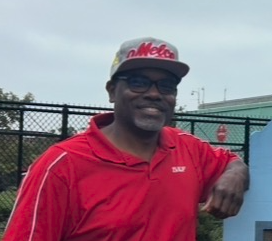
 Tell us about your job. What does your day-to-day look like and what kinds of equipment do you work on most?
My official title is Assistant Plant Manager, and my primary responsibility is to ensure my staff of thirteen team members and outside service contractors are properly maintaining all the process equipment throughout the facility. The only typical part of my day usually involves multiple meetings with various internal and external departments to discuss everything from budgets, contracts, construction projects or upcoming work. Regarding equipment, our department will work on everything throughout the city - ranging from changing light bulbs to major construction projects.
What do you like best about working here (both the role itself and being at the City of Palo Alto specifically)?
The best thing about working for the City of Palo Alto is the pension and job stability it offers. As an Assistant Plant Manager, I enjoy the challenge of ever-changing priorities and not having a routine or repetitive job.
What are the biggest challenges — both in the day-to-day maintenance work, and in building a career in this field (e.g. training costs, time, access to certifications)?
The biggest challenges I face daily are dealing with employees not the equipment. No two employees are the same, so as a manager you have to learn how to navigate around people’s emotions, skillsets and motivation levels to achieve what’s needed from them. The biggest challenge in this field is finding qualified employees to fill the open positions we have. With the high cost of living in our area, most qualified candidates can’t afford to live in the local area based on the salary.
How did you get into maintenance work? What brought you to wastewater specifically?
As a young child, I always enjoyed taking things apart to see how they worked internally so I knew I wanted a career that involved troubleshooting, building, or repairing things. After a 22-year career in the pulp and paper industry, our facility closed down in 2017. I wanted a stable job, and I knew some people within the wastewater industry.
What certifications or training have been most valuable in your career, and what does career advancement look like in this field?
Years of on-the-job training, hard work, and a positive attitude has been the most valuable assets for me to advance in my career. Advancement opportunities are plentiful in this industry and CWEA certifications along with higher education degrees are the typical path most people take to advance in this industry.
What trade skills or experiences should someone build before applying for a job like yours?
I earned my skills the hard way – By showing up to work every day and putting in very long labor-intensive hours. A faster and better way to build up skills would be to enter a trade apprenticeship program or earn a college degree (depending on the field you're entering).
Is a four-year degree necessary for this career? What paths (trade program, apprenticeship, etc.) get people here?
A four-year degree is highly desired but not necessary to enter this industry, however, education will allow you the best opportunity to advance into higher paying management level positions. I personally do not have a college degree, but I encourage everyone to achieve at least a bachelor’s degree to stay competitive in today’s job market. Anyone interested in a career in the water industry should look into obtaining a certification through the CWEA. They have multiple types of certifications you can achieve in the laboratory, mechanical, electrical and operations fields.
What qualities or traits make someone a good fit for this kind of work?
I believe employers in every field are looking for motivated, outgoing employees that are willing to show up to work on time with a positive attitude. Those traits are very hard to find nowadays and will allow growth opportunities in any company!